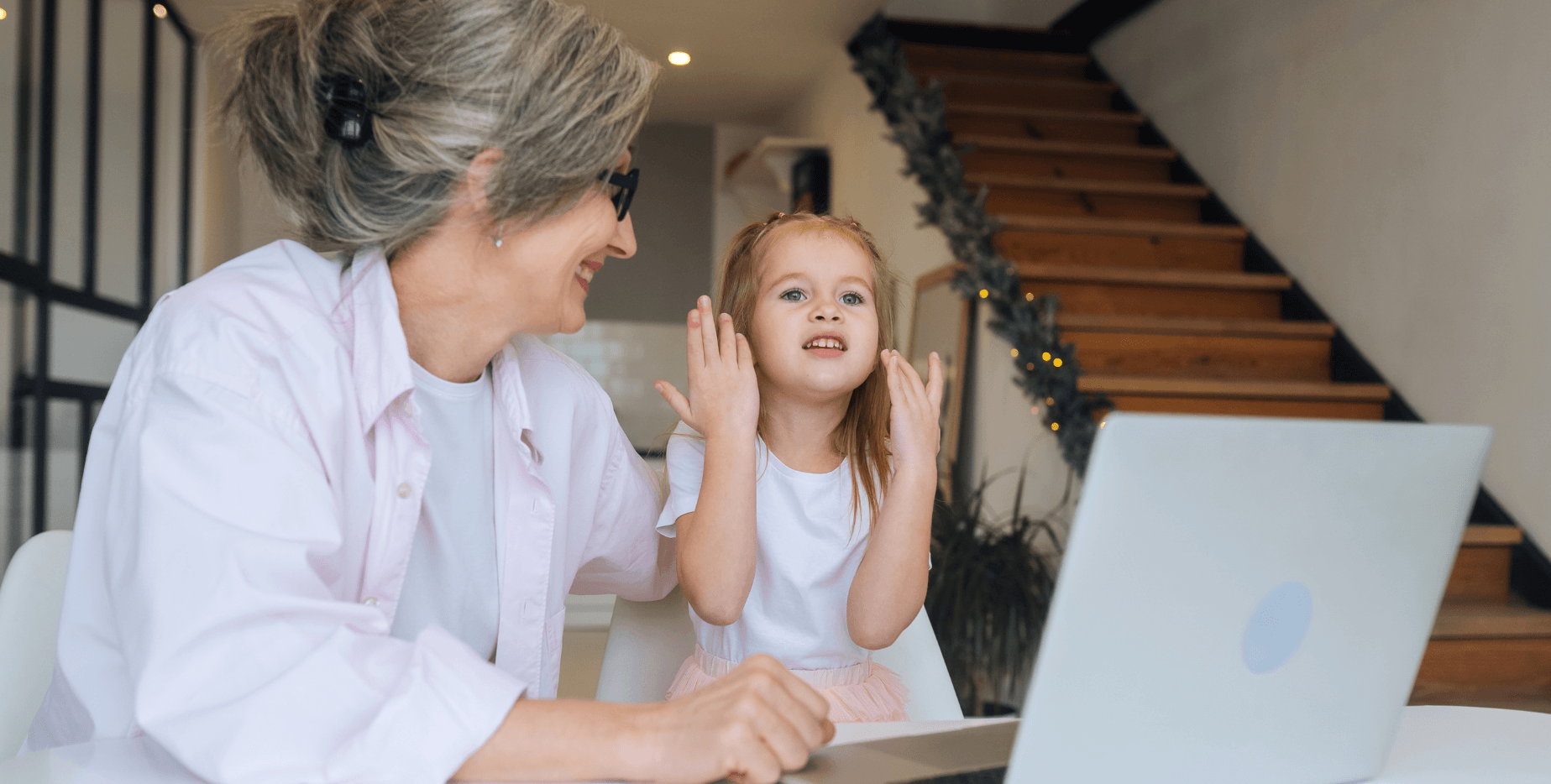
If you haven’t tried speech pathology via telehealth before, you might be wondering how much you can really achieve through a screen.
For some people, the idea feels a little strange at first. If speech pathology is about communication, shouldn’t the speech pathologist and participant be in the same room?
Not necessarily.
At LiveBig, speech pathology can take place at home, school, work, in the community or via telehealth, depending on the person’s needs and goals. Telehealth simply gives people another way to access support, particularly when getting to face-to-face appointments isn’t always practical.
So, what actually happens in an appointment?
What does a telehealth speech pathology session look like?
The honest answer is that no two sessions will look exactly the same.
Speech pathology covers much more than speech sounds. LiveBig’s Speech Pathologists support people with speech and language development, everyday communication, social communication, augmentative and alternative communication (AAC), and swallowing and mealtime needs.
That means the session itself will depend on what the person is working towards.
For one participant, the focus may be expressing their needs or making choices. For someone else, it could be understanding language, building confidence in conversations or using an AAC system to communicate.
The important thing is that the session has a purpose that connects back to the person’s everyday life.
Does someone have to sit in front of a computer for the whole session?
This is an understandable concern, particularly for parents whose child isn’t likely to spend an appointment sitting calmly in front of a screen.
Communication doesn’t only happen when we’re sitting at a desk.
It happens when we’re deciding what to eat, playing a game, getting ready for school, asking for something, telling someone we don’t like something or trying to join a conversation.
A person’s needs and goals should guide what their speech pathology support looks like. If you’re concerned about how you or your child would engage with telehealth, it’s worth raising this with the Speech Pathologist when discussing whether this type of appointment is suitable.
There can be benefits to being at home
For some people, joining an appointment from a familiar environment can be useful because it’s where so much everyday communication already happens.
If someone is working towards communicating their choices more independently, for example, those choices happen throughout their day. If mealtimes are an area of concern, the family’s usual environment is part of the broader picture.
It can also give families and carers an opportunity to be involved where appropriate. LiveBig’s approach is to work together with participants, families and other service providers towards the person’s goals.
The aim isn’t for therapy to exist only within an appointment. The skills and strategies being developed should be relevant to life outside of that session too.
What about AAC?
AAC, or augmentative and alternative communication, includes different ways people can communicate beyond or alongside speech.
This can include picture-based systems, communication boards and speech-generating devices. AAC assessment and support forms part of LiveBig’s Speech Pathology service.
For someone who uses AAC, the focus is still on communication. The technology or tool is simply part of how the person communicates.
Is telehealth right for everyone?
Telehealth isn’t necessarily going to suit every person, every goal or every situation.
Some people may prefer to see their Speech Pathologist face-to-face. Others may like the convenience of connecting remotely. And a person’s preferences and support needs may change over time.
Rather than looking at telehealth and face-to-face therapy as an either-or choice, it’s better to start with the person.
What do they want help with? How do they prefer to communicate? Where are they most comfortable? What are their goals?
From there, you can have a much more useful conversation about what their speech pathology support could look like.
Finding speech pathology that fits into everyday life
Ultimately, communication isn’t something we only use during a therapy appointment.
We use it constantly – to make choices, share ideas, build relationships, participate in our communities and let other people know what we need.
That’s why speech pathology should connect back to the person’s real life and the things that are important to them.
LiveBig provides Speech Pathology for NDIS participants and private clients, with support available at home, school, work, in the community and via telehealth where suitable.
If you’re considering speech pathology but aren’t sure whether telehealth is the right option, get in touch with LiveBig to talk about what you’re hoping to achieve and the type of support that could work for you.