Speech Pathology
for NDIS Participants and private clients


Speech Pathology
for NDIS Participants and private clients
Build communication, confidence and independence with personalised speech pathology tailored to your NDIS goals.
Speech pathology helps people develop the communication and swallowing skills they need for daily life, from understanding and expressing language to social interaction, mealtime safety and using communication supports.
We can help you:
- Build speech, language and communication skills
- Support social communication and confidence
- Develop safe mealtime and swallowing strategies
- Access therapy aligned to your NDIS goals
What is speech pathology?
Speech pathology is an allied health service that supports people with communication and swallowing needs.
Under the NDIS, speech pathology can help people build their ability to communicate, understand language, participate socially, use assistive communication tools and manage mealtime or swallowing challenges.
Watch our video and learn more about
our Speech Pathology service (1.20 mins)
Is speech pathology covered under the NDIS?
Yes. Speech pathology is commonly funded under the NDIS when it supports communication, social participation, daily functioning or swallowing needs related to your goals.
Do I need a referral?
No, you don’t need a formal referral to access speech pathology through LiveBig. You can contact us directly or be referred by a support coordinator, plan manager, family member or other provider.
Where can speech therapy happen?
Speech therapy can happen at home, school, work, in the community or via telehealth, wherever support is most useful and relevant to your daily life.
How long are sessions?
Sessions are typically 45–60 minutes, depending on your needs, goals and plan.


Signs speech pathology might help
- Difficulty being understood by others
- Delays in talking, language or communication development
- Trouble understanding instructions or questions
- Challenges with conversations or social communication
- Reliance on gestures, frustration or behaviour to communicate needs
- Difficulty with reading, writing or language-based learning
- Coughing, choking or discomfort when eating or drinking
- Need for communication aids or assistive technology
Speech pathology for different needs
Speech pathology for autism
Speech pathology for autism can support communication, social interaction and participation in daily routines. Therapy may focus on understanding and using language, building social communication skills, supporting emotional regulation through communication, or introducing AAC when speech is limited or unreliable.
Common goals may include helping a child make choices, communicate needs, participate in classroom routines, or build confidence interacting with family, peers and support people.
Speech pathology for developmental delay
Speech pathology can support children and young people who are developing speech, language or communication skills at a different pace. Therapy may focus on early language, play-based communication, understanding instructions, vocabulary development and building confidence in daily interactions.
Speech pathology for intellectual disability
Speech pathology can help people with intellectual disability build practical communication skills for daily life. Support may include understanding information, expressing choices, using visual supports, developing social communication and improving participation at home, school, work or in the community.
Speech pathology for swallowing and mealtime needs
Speech pathologists can support people who experience difficulty chewing, swallowing, managing textures, or eating and drinking safely. Therapy may include assessment, mealtime strategies and recommendations to support safer and more comfortable participation in meals.
Related Speech Pathology Articles
How our speech pathology works

Getting Started
We learn about your needs, goals and NDIS plan.
Assessment
A speech pathologist completes an assessment to understand your strengths, communication needs and areas for support.
Therapy plan
We create a personalised therapy plan aligned to your goals.
Ongoing support
Regular sessions help build skills, track progress and adjust supports over time.
Reporting
We handle the reporting for NDIS reviews
What’s included in our Speech Pathology services
- Speech and language assessments
- Therapy sessions at home, school, in the community or via telehealth
- Social communication support
- AAC assessments and recommendations
- Swallowing and mealtime assessments where clinically appropriate
- Communication strategies for families, carers and support teams
- NDIS reports and documentation
Speech pathology often works alongside services like occupational therapy, psychology, physiotherapy and behaviour support. As a multidisciplinary provider, LiveBig can bring these supports together, making it easier to coordinate your care and reduce the complexity of managing multiple providers.
Is speech pathology covered by your NDIS plan?
We use the NDIS price guide for our service charges and if you are a private client contact us and we will have a chat.
Speech Pathology is usually funded under:
- Capacity Building – Improved Daily Living (NDIS Item Number 15_005_0118_1_3)
- Sometimes Core Supports, depending on plan (NDIS Number 01_821_0115_1_1)
Not sure if your plan includes funding for Speech Pathology?
Our team can help you understand your plan and get started.
Who we support
NDIS participants, children, adolescents, adults and private clients
People with communication, language or swallowing needs
Individuals building independence, confidence and social participation
Families, carers and support networks
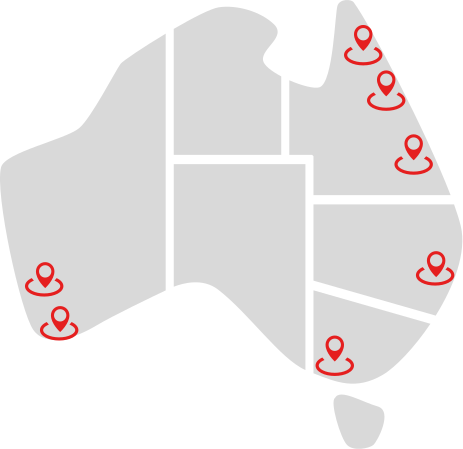
Where we deliver speech pathology
We work with you to provide services where it best suits you, including at home, school, work or in the community. We also offer telehealth for added flexibility.
Our approach is always centred around your daily life. We work closely with your support network, including family, carers, teachers and other providers, to help communication strategies carry through into everyday routines.
Practical outcomes we focus on
Improved communication skills
Greater confidence expressing needs and choices
Better participation at home, school, work and in the community
Safer and more supported mealtimes where needed
Increased independence and wellbeing

Why LiveBig?
- National NDIS provider
- NDIS registered provider
- Multidisciplinary therapy team
- Flexible delivery (home, community, telehealth)
- Focus on real-life outcomes, not just sessions
Our speech pathologists
- Qualified speech pathologists
- SPA registration (Speech Pathology Australia)
- Experienced across a range of disabilities and communication needs
- Focused on practical, real-world outcomes
- Collaborative, multidisciplinary approach across LiveBig
Filter by location:
Ava D.
Speech Pathologist
Queensland
Amy F.
Speech Pathologist
Queensland
Kirushna E.
Speech Pathologist
New South Wales

Mervin W.
Speech Pathologist
New South Wales
Frequently Asked Questions
How do I start speech pathology with LiveBig?
Getting started is simple. You can contact our team directly or ask your support coordinator to make a referral. We’ll take the time to understand your goals, review your NDIS plan, and match you with the right speech pathologist.
Do I need a referral?
No, you don’t need a formal referral, you can contact us directly for support.
Can speech therapy be done at home or school?
Yes. Speech therapy can be delivered at home, school, work, in the community or via telehealth.
How quickly can I get started?
Timeframes vary depending on location and availability, but we aim to connect you with a therapist as quickly as possible.
What happens in a speech pathology assessment?
A speech pathology assessment involves understanding your strengths, communication needs and goals. Your therapist may assess speech, language, social communication, AAC needs or swallowing concerns, depending on your situation. You’ll receive recommendations and a therapy plan tailored to your goals.
Can speech pathology help if someone does not speak?
Yes. Speech pathology can support people who are non-speaking, minimally speaking or who use communication in different ways. This may include AAC, visual supports, gestures, communication devices and strategies for families and support teams.
For further information
Download our Speech Pathology factsheet

Endorse LiveBig as your Service Provider
With the introduction of the PACE NDIS system, please ensure that LiveBig is endorsed as your Provider.
To assist, our Organisation ID is 405 006 0975
There are two ways a participant or nominee can endorse a provider:
- Contact the NDIA National Call Centre on 1800 800 110 and advise that they would like to endorse the provider
- Via their "My NDIS contact" - this could be a Local Area Coordinator or Planner.
Speech therapy often works alongside:

Get started with speech pathology today
We’ll guide you through the process and help you get the most out of your NDIS plan.

Starting school and need immediate support? We are here for you.
The transition from full-time parental care or daycare to schooling can be a big change…








ABN 28 632 290 325
Visit our sister companies


© 2026 LiveBig
